
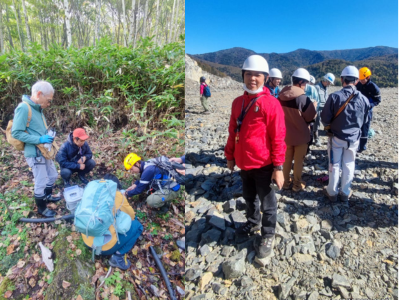
In October 2025, the Faculty of Engineering, Universitas Hasanuddin (Unhas), through the Department of Geological Engineering, will undertake a Visiting Research/Lecturer program at Hokkaido University, Sapporo, Japan, hosted by the Division of Sustainable Resources Engineering (SRE), Faculty of Engineering, under the supervision of Prof. Tsubasa Otake. The program is scheduled for a duration of two to three weeks, as agreed with the host institution, and focuses on advancing collaborative research in the field of new and renewable energy, particularly natural hydrogen generation.
This visiting research forms part of Unhas’ strategic agenda to strengthen international academic networks, enhance research capacity, and expand its contribution to global energy transition efforts. Natural hydrogen generation has emerged as a promising clean energy pathway, gaining increasing attention worldwide as countries pursue net-zero carbon targets. Through this collaboration, Universitas Hasanuddin seeks not only to advance scientific knowledge, but also to contribute to the development of future energy technologies, strengthen human resources in sustainable energy research, and reinforce Indonesia’s especially Sulawesi’s role in the global clean energy landscape.
.png)
Hokkaido University was selected as a strategic partner due to its strong global reputation in Earth Science and Engineering, Resources Engineering, and Environmental Geology, as well as its consistent ranking among the world’s top universities. The university is also recognized for its leadership in sustainability, ranking first in Japan in the THE Impact Rankings for contributions to the Sustainable Development Goals (SDGs). Prof. Tsubasa Otake is internationally recognized for his expertise in serpentinization processes and natural hydrogen generation, with extensive publications and projects supported by NEDO (New Energy and Industrial Technology Development Organization), Japan’s national innovation accelerator for future energy technologies.
During the visiting period, the researcher from Universitas Hasanuddin, Bahrul Hidayah, S.T., M.T., will engage in joint experiments and laboratory-based research on ultramafic rocks related to serpentinization and hydrogen generation. The program includes advanced laboratory training, utilization of cutting-edge research facilities such as the Zeiss Digital Slide Scanner Axioscan 7 Geo and Gas Chromatography systems, data analysis and interpretation sessions, as well as fieldwork in selected geological sites in Hokkaido. These activities are designed to strengthen methodological expertise, enhance laboratory-based research skills, and support the development of high-quality international publications.