
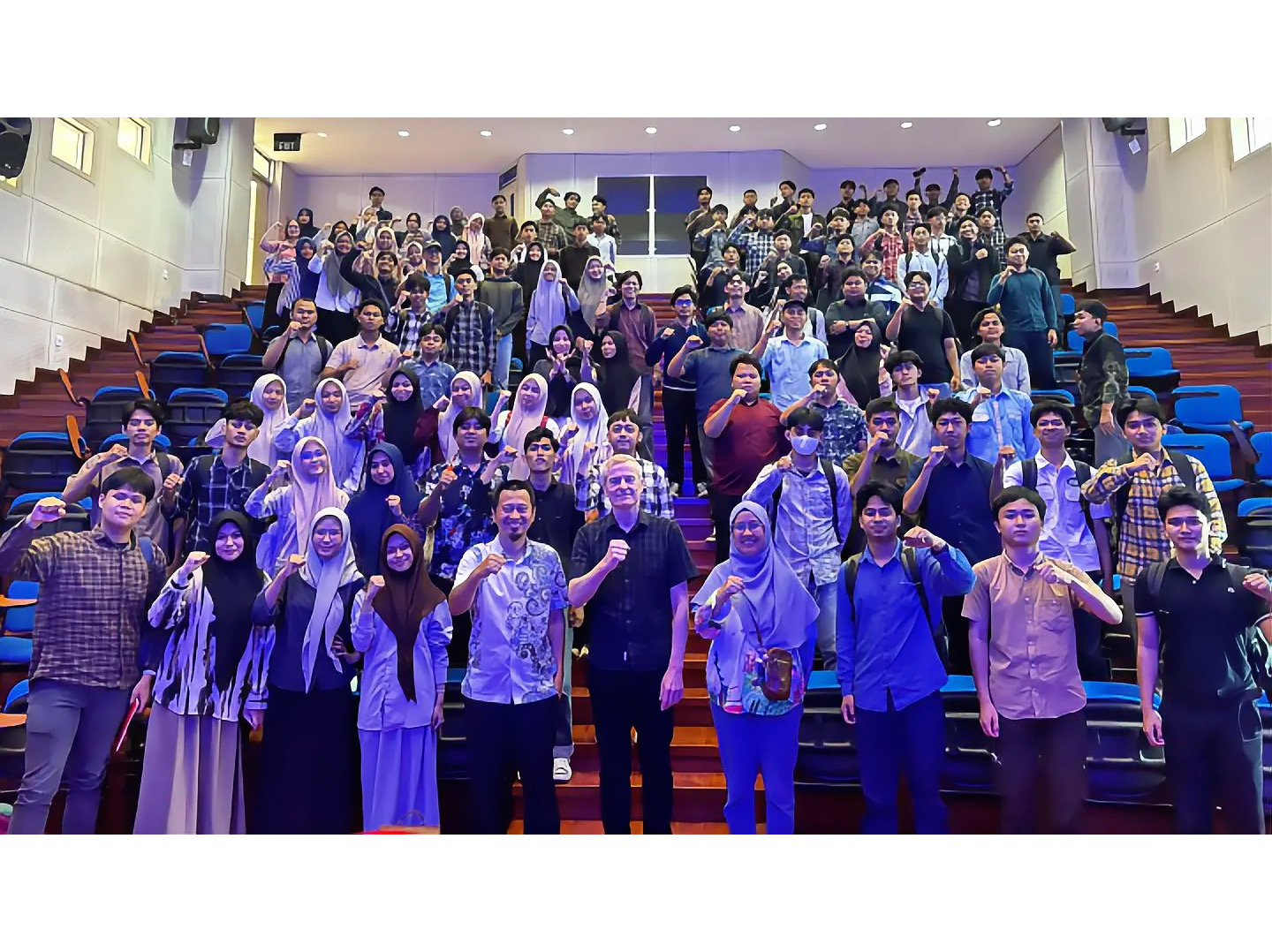
The Department of Marine Engineering Systems, Faculty of Engineering, Hasanuddin University, successfully hosted an international guest lecture featuring Dr. Gregory Cox, a distinguished maritime industry expert from Doen Pacific PTY. LTD., Australia, on 20 April 2026. The event was organized to broaden students' understanding of emerging maritime technologies and strengthen the connection between academia and the global shipping industry. The lecture was attended by students, lecturers, and researchers with a strong interest in modern ship propulsion systems.
Opening the session, Dr. Faisal Mahmuddin, Head of the Department of Marine Engineering Systems, welcomed the distinguished speaker and emphasized the importance of international collaboration in enhancing engineering education. He highlighted that exposure to industrial expertise enables students to better understand current technological trends and prepare for future challenges in the maritime sector.
During his presentation, Dr. Gregory Cox introduced the concept of hybrid propulsion systems, which integrate conventional diesel engines with electric power systems to improve vessel performance. He explained how hybrid propulsion offers significant advantages, including enhanced energy efficiency, reduced fuel consumption, and lower greenhouse gas emissions, making it an increasingly attractive solution for the global maritime industry as environmental regulations continue to evolve.
/October-December Quarter (7).png)
The lecture also featured practical insights drawn from Dr. Cox's industrial experience and research. He demonstrated the implementation of hybrid propulsion technologies through case studies and presented engine-matching analyses illustrating how diesel and electric propulsion systems can be optimized under various operational conditions. The session emphasized the importance of integrating mechanical and electrical engineering principles in designing next generation marine propulsion systems.
An interactive discussion followed the presentation, with students actively engaging in questions regarding the feasibility of implementing hybrid propulsion on large commercial vessels. Responding to these inquiries, Dr. Cox explained that while hybrid systems are technically applicable to larger ships, their implementation requires more sophisticated energy management, battery capacity planning, and system integration. He further noted that the maritime industry is steadily moving toward hybrid and fully electric propulsion technologies as part of the global transition to sustainable shipping.
The international guest lecture reflects the Faculty of Engineering's commitment to providing students with global perspectives and industry-oriented learning experiences. By facilitating knowledge exchange between academia and international practitioners, the Department of Marine Engineering Systems continues to equip future engineers with the competencies required to develop innovative, efficient, and environmentally responsible maritime technologies.